Monday, March 24, 2008

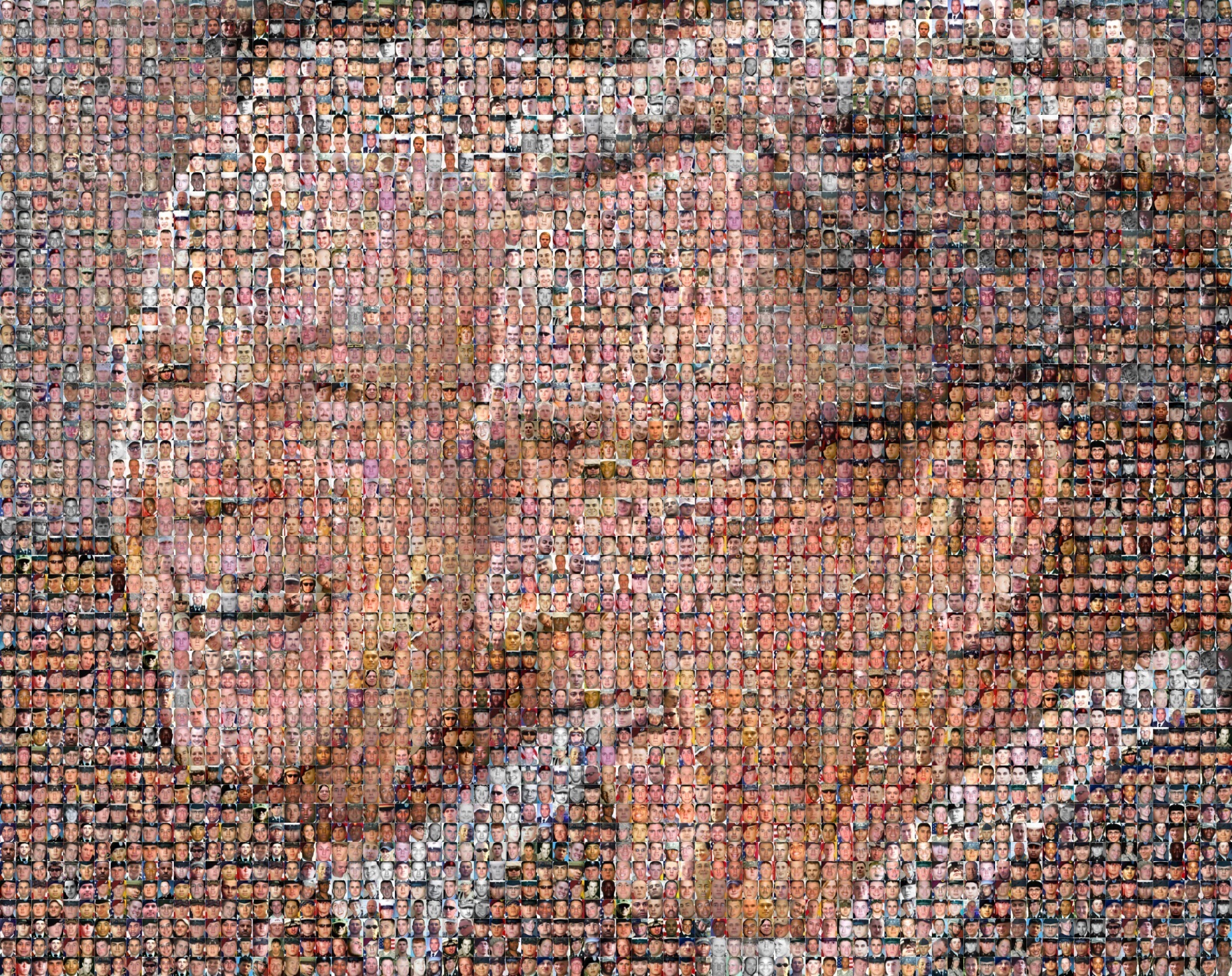
Four Thousand And Counting


Via Watertiger, from Nico Pitney at the Huffington Post. Just click on the picture to see the full size image. If you're getting to the Internet over a modem, go take a break while it loads. Then consider that if someone ever did a mosaic of the Iraqi dead, it would be something like 250 times larger.

As Nico Pitney notes, some pictures are duplicates, because photos weren't available for all of the dead.


More Fun With The Google

"Ferrous", the official mascot of the Lehigh Valley Iron Pigs AAA baseball club. Image credit: cropped from Iron Pigs website image by Cujo359. See Note below.

For some reason, Slobber and Spittle is the number one Google site for "bethlehem iron pigs schedule baseball". Of course, a few weeks ago I wrote an article about them, "From Pig Iron To Iron Pigs", and referred to the Bethlehem Steel plant that inspired that name. That's part of the reason.

Part of the reason is that the Iron Pigs are actually located in Allentown, which is right next door to Bethlehem (literally, they share a border), but they're not located in Bethlehem.

The other part of the reason, I think, is that you can't find any mention of their schedule on the Iron Pigs' website. Talk about amateurish site design. The first thing I'm usually interested in when I visit a team's site is the schedule. You'd think they'd understand such things and make it as easy as possible. Instead, they make you discover it by accident.

Compared to the task of finding their schedule on that website, trying to find it on a political blog named after a rabid animal might seem like a good idea. So, as the Internet's leading expert on the Iron Pigs' baseball schedule, let me pass on a bit of advice if you're having trouble. Go to their site, then enable Javascript. You'll find it in the floating menu under "Tickets".

NOTE: This should be blindingly obvious, but I'll state it anyway - this site is in no way associated with, or endorsed by, the Lehigh Valley Iron Pigs baseball club.


Saturday, March 22, 2008

Another Reaction To Obama's Speech

Debra Dickerson has an interesting essay in Mother Jones online edition:

In a post I found quite illuminating on the black prophetic tradition, I still note a troubling flaw from Melissa Harris-Lacewell, in The Root: "But we cannot enter that promised land together if white America refuses to acknowledge the prophetic truths of black religiosity. ...We cannot learn from our prophets if we denounce them. Silencing Jeremiah Wright will not makes us forget hundreds of years of racial inequality. Now is the time to listen to each other carefully." I see what whites are supposed to listen to, but blacks make up the 'other' here: to what are we supposed to listen?

In the only post written after the speech, I found this offering most helpful. Also from The Root, it's by WaPo religion reporter Hamil Harris:"But the lingering question out of this whole episode is whether Americans, black and white, can ever be liberated from a mindset in which it is always hard to believe that those who look differently from us can really be a brother or sister."

Amen.

For too long, blacks have "asked" this question of whites, assured that the answer will, must, always be no. But, based on what I'm reading so far, it's time for whites to flip the script and ask blacks the same question. Don't ask whites to do what you have no intention of reciprocating; it takes two to transcend race. It only takes one to unleash a diatribe no one will listen to.

This, brothers and sisters, is where we begin. Not with reparations or the fight against affirmative action or the criminal justice system, or who's right and who's wrong. Do we actually want to co-exist peacefully in mutual respect? If so, how best is that to be achieved?

Black Intelligentsia: Holla If You Hear Obama

[quotes from the original]

In my own reaction to Sen. Obama's speech, I tried to get across the idea that part of what needs to happen for race relations to improve is for all sides to realize that the others are not going to be perfect, and that understanding the other point of view is just as important as stating our own. In reading it over, I realize I only emphasized that point using quotations, but that's certainly a feeling I got from that speech.

I'm glad to see I'm not alone.


The Gap Closes


In national polls this week, Barack Obama's lead over Hillary Clinton has begun to diminish, according to Pollster. The latest graph, which is based on polls through Wednesday, March 18, shows that the gap between them on the smoothed chart has closed to 1.8% (47.5 - 45.7). Obama's support had leveled off, and Clinton appears to have picked up undecideds and "otherwise-decideds" - people who were for other candidates and have now picked between the two who are left.

These numbers don't include the effect of the revelations about Obama's former pastor, Jeremiah Wright, nor Obama's response. Next week's numbers should tell that tale.

One possible explanation of this recent trend is bias in the polls conducted recently. Most have been from one organization - Gallup. Gallup does show a gradual trend in favor of Clinton, but it's not quite as large as the gross numbers would indicate. Gallup's numbers generally have shown Clinton doing better than average. As other organizations conduct new polls, this effect, if any, should also become clearer.

Meanwhile, eRobin, over at her blog Factesque, sums up my feelings about this race pretty well:

I think I have NAFTA Derangement Syndrome. If the PA primary were tomorrow, I'd vote for Hillary. How's that for American voter crazy? But I just saw her on SNL and she was likable enough and now she's the underdog and they're both Republicans anyway. And that NAFTA CTV story is really bugging me. How am I supposed to vote for that guy?

Deciding the Lesser of Two Evils Turns Out to be Harder than I Thought

While I don't agree that they're Republicans (at least, they wouldn't pass for Republicans these days), they definitely are less desirable than some of the earlier candidates. They're also less progressive than I'd like, by a long ways. But that's the choice we're left with. I seriously doubt the wisdom of any progressive who pictures either of these two as the ideal candidate, or the other as the anti-Christ. It's pretty clear to me that they're neither.

So, take your pick, but don't try to tell me it's a great choice. It's just better than the alternatives. Particularly these alternatives.

UPDATE: Rasmussen's results for today indicate that Clinton has experienced a ten point bump in the last couple of days. A look at their daily results table shows that she's seen such bumps before, for whatever reasons. I'd call this within the margin of Rasmussen's error for now. There is some bad news for Obama, though. His numbers seem to be nearly identical to Clinton's now:

On Saturday, Obama’s favorable ratings slipped a little further—46% favorable, 51% unfavorable. Before the Pastor Problem became big news, Obama was viewed favorably by 52%. One month ago, he was viewed favorably by 56%. McCain is viewed favorably by 54% of voters nationwide and unfavorably by 43%. For Clinton, those numbers are 43% favorable, 54% unfavorable (see recent daily results).

Daily Presidential Tracking Poll: March 22, 2008

As voters get to know a candidate, they often start to like him less. Clinton supporters have argued that we've been through that process before, and her numbers are what they are likely to be. That may or may not be good news, considering that her unfavorables are also higher than her favorables. Personally, I don't get why her unfavorables are as high as they are, but I don't watch much TV news. Nevertheless, that's where they are, and they don't seem likely to change. Here's why that's bad:

Looking ahead to the General Election in November, John McCain continues to lead both potential Democratic opponents. McCain leads Barack Obama 49% to 41% and Hillary Clinton 49% to 43% (see recent daily results). New polling shows McCain leading both Democrats in Georgia and Arkansas. In Minnesota, the race is very close.

Daily Presidential Tracking Poll: March 22, 2008

The only antidote to this, I think, is for the news to start covering McCain's numerous indiscretions regarding lobbyists. So far, as Media Matters observes, they haven't done that.

(h/t Taylor Marsh reader Scan.)

Thursday, March 20, 2008

Arthur C. Clarke

Image credit: Clarke Foundation


The man whose writing introduced me to science fiction died on Tuesay. Arthur C. Clarke, who movie fans best know as the author of 2001: A Space Odyssey, and 2010: The Year We Make Contact, died of what the Wikipedia entry terms "breathing problems". CinemaBlend writes:

Arthur C. Clarke died on Wednesday at the age of 90. He had left instructions that no rites of any faith should be performed at his funeral, which will take place on Saturday in Sri Lanka. He will be buried at Colombo’s general cemetery.

Arthur C Clarke Dead At The Age Of 90

This isn't surprising. He's listed in the Celebrity Atheists list as of "ambiguous" beliefs, but in this interview in a Sri Lankan newspaper, he makes the case that he was an atheist:

Does Sir Arthur think much about death? ``When I was last in New York I met Woody Allen and I agree with him: `I'm not frightened of death. I just don't want to be there when it happens.' When I joined the RAF they put me down as C of E. I got hold of the man handling the paperwork and made them change it to `pantheist'. Now I say I'm a crypto-Buddhist, but I'm anti-mysticism and I have a long-standing bias against organised religion. I don't believe in God or an afterlife.''

Exclusive interview with Arthur C. Clarke: Life beyond 2001

Whatever his beliefs, clearly mysticism and nonsense weren't among them.

My first brush with Clarke's work was Tales From The White Hart, a collection of short stories supposedly told at a pub frequented by scientists. Clarke had a powerful imagination and an equally powerful grasp of science - his stories about alien encounters, including 2001, are still among the most imaginative and plausible. He also was among the first to imagine things like geosynchronous satellites and a "space guard" that would watch for asteroids on course for the earth.

The story of first contact that I found to be one of the most memorable was Clarke's "Encounter At Down", where an alien survey crew encounters primitive humans, but has to abandon them in order to return to their own world, which is in crisis. "If I Forget Thee, O Earth", featured in one of my high school English classes, involved a rite of passage for a young man on the Moon. His father takes him outside the habitat to show him the Earth, which has been ruined in apocalyptic war. While the characters weren't as deep as those of some modern science fiction writers, they were much more than cardboard cutouts. CinemaBlend observes:

The best sci fi stories are those that do not worry about a setting. Sci fi lives and breathes in its characters, and Clarke never lost sight of that. And while the tale was being told he also took the time to create a world that was based on a skewed version of our reality. In that way he inspired many young kids to dream of what could be, and there are more than a handful of adult scientists who are currently putting to work the dreams of a novelist. Not that Clarke was required for NASA to look at a possible moon base, but it didn’t hurt for one man to dream and imagine.

Arthur C Clarke Dead At The Age Of 90

Clarke wrote some of the most interesting stories I read as a young man, and now the world seems a little emptier knowing there won't be any more.

For those interested, researching this article has turned up some interesting sites related to Arthur Clarke. They include:

The Arthur C. Clarke fansite, which discusses many of his stories and novels.

CNet's Remembering Arthur C. Clarke, a collection of photos of Clarke and related subjects.

A BBC article on many of the things Clarke imagined in his novel.

And, of course, the Wikipedia entry.


Tuesday, March 18, 2008

Five Years And How Many Dead?


The very first article I wrote here was entitled "3000 Plus 650,000 Equals 1 And 0". At the time, that was the number of U.S. dead in Iraq, the number of Iraqis estimated (roughly) to have been killed by the effects of that invasion, the number of Iraqi dictators executed, and the number of perpetrators of 9/11 who were apprehended.

Today, more than a year later, as we mark the fifth anniversary of this unnecessary war, we seem no closer to ending it. The first two numbers have gone upwards, we are now close to 4,000 combat deaths, and we must be closing in on a million Iraqi dead if you project out what's known about mortality rates since then. The other two numbers haven't changed. Neither has this:

We've gotten nothing out of this war that the average American would want. We haven't defeated Al Qaeda. We haven't defeated a country that was a threat to us. We haven't even made that country healthier, let alone a thriving democracy. That adds up to nothing for a whole lot of death, not to mention a whole lot of expense.

"3000 Plus 650,000 Equals 1 And 0"

There are now at least four and a half million Iraqi refugees.

Juan Cole, summarizing today's article in Salon, sums up the Administration line over the last five years:

I posit that each year of the war has been characterized by a central lie by the Bush propaganda machine.

Year 1: "There is no guerrilla war."
Year 2: "Iraq is a model democracy."
Year 3: "Zarqawi is causing all the trouble."
Year 4: "There is no Civil War."
Year 5: "Everything is calm now."

I also suggest that John McCain is pushing for:

Year 6: "Total victory is around the corner."

5 Years, 5 Lies: Cole in Salon

It looks like President Bush is getting started on the Year Six narrative already:

WASHINGTON, March 18 (Reuters) - President George W. Bush will acknowledge on Wednesday the Iraq war has been fought at a high cost but will insist a U.S. troop buildup has opened the door to a "major strategic victory" against Islamic militants.

"The successes we are seeing in Iraq are undeniable," Bush will say in an upbeat assessment of the U.S.-led campaign in a speech marking the fifth anniversary of the war, according to excerpts released on Tuesday.

Bush to hail prospect of Iraq "strategic victory"

The urge for fantasy hasn't changed, only the nature of the fantasy. Curiously, the rest of the world hasn't felt the urge. Voice Of America reported Monday:

The image of the United States has suffered as a result of the 2003 U.S.-led invasion of Iraq to topple Saddam Hussein. Opinion surveys show international approval of the United States at all-time lows. VOA's Michael Bowman reports form Washington, America's continued involvement in Iraq remains a major irritant in global perceptions of the United States.

Since 2003, demonstrations against the United States have become commonplace, and not just in countries historically opposed to U.S. policies. Major protests against the U.S.-led war in Iraq have been mounted in dozens of countries allied with Washington, including Canada, Britain, Germany, and Japan.

War in Iraq Badly Damages US Image Internationally

Five years, a million lives, and a half-trillion dollars later, our reputation around the world has never been lower, and things are just as screwed up in Iraq as the day we pulled down Saddam's statue.

Over at Outta The Cornfield, One Fly writes:

It's difficult to express the rage within me the last five years. Five years ago February 15 drove a total of 11 hours to spend four hours in Colorado Springs to protest the upcoming invasion of Iraq. Not much has changed since then because to me these people in power do whatever they want whenever they want because they can as there is no one to stop them.

Blogswarm

I feel that way, too. What will it take for our Congress to finally wake up and realize what a mess they've allowed us to get into? I don't accept that we need sixty Democrats in the Senate to make any real progress. If they can't manage with the ones they have, they aren't trying very hard. They have yet to make the Republicans carry out a threat to filibuster, and they've threatened at unprecedented rates, in order to stop the things from happening that most Americans wanted at least two years ago.

So today I'm displaying this blogswarm picture here. I have no idea if it will do any good. I'm not sure I'm even doing it right. But in honor of his being such an ineffectual majority leader, I'm going to put this picture here of Senator Harry Reid looking like a hopeless putz one more time.


I'm pretty sure I did that right.

UPDATE (Mar. 24): Added a mention of Iraq's refugees. Hard to believe I'd forgotten to mention them, but then they're probably used to being overlooked.


Hardin Smith On Patriotism

The Magna Carta, from a page on citizenship at the UK National Archives


If there's one reason I visit Firedoglake, it's to read what Christy Hardin Smith has to say. She has a clear, analytical writing style that most of us would do well to emulate. Today, she reprinted her speech at the Take Back America conference. She concludes:

Giving up our civil liberties does not make us more safe. It simply makes us less free. And if we hand over everything it is to be an American -- our core values to be sacrificed on the alter of consolidation of power in a false trade for a trumped up version of temporary peace of mind...until the next time we are asked to give up a little more liberty, and so on and so on...then we have already lost. We must all, every day, stand up for liberty, for our laws, and for the freedoms so hard won by so many generations who stood tall in the face of tyranny and threats in the past. We owe that to our forbears and to all the generations that follow ours.

It is up to all of us. Every single day. Being a citizen ought to be something that all of us DO.

Being A Citizen Is Something That You DO

The people I respect most are the ones best able to put this thought into action. It's not just about working for a political party or voting. It's about doing whatever you can to make your neighborhood, country, or world a better place. Free people can choose how best to do that.

Click on the link and give it a read.


Obama On Race In America

As I noted yesterday, Barack Obama has a problem he needed to address in the words of the pastor of his church, Jeremiah Wright. Today, he did a pretty good job of doing that:

And occasionally [black anger] finds voice in the church on Sunday morning, in the pulpit and in the pews. The fact that so many people are surprised to hear that anger in some of Reverend Wright's sermons simply reminds us of the old truism that the most segregated hour in American life occurs on Sunday morning. That anger is not always productive; indeed, all too often it distracts attention from solving real problems; it keeps us from squarely facing our own complicity in our condition, and prevents the African-American community from forging the alliances it needs to bring about real change. But the anger is real; it is powerful; and to simply wish it away, to condemn it without understanding its roots, only serves to widen the chasm of misunderstanding that exists between the races.

Obama Race Speech: Read The Full Text

As a life-long atheist, I can't comment much on how segregated Christian churches are in this country, but given what's happened over the years in our communities, I have little doubt that they are. I do know that there's anger from all sides in this debate, some of it justified, some not. To not acknowledge that it's there or that it is somehow un-American is to not understand what it is to be American. Obama adds:

On one end of the spectrum, we've heard the implication that my candidacy is somehow an exercise in affirmative action; that it's based solely on the desire of wide-eyed liberals to purchase racial reconciliation on the cheap. On the other end, we've heard my former pastor, Reverend Jeremiah Wright, use incendiary language to express views that have the potential not only to widen the racial divide, but views that denigrate both the greatness and the goodness of our nation; that rightly offend white and black alike.

I have already condemned, in unequivocal terms, the statements of Reverend Wright that have caused such controversy. For some, nagging questions remain. Did I know him to be an occasionally fierce critic of American domestic and foreign policy? Of course. Did I ever hear him make remarks that could be considered controversial while I sat in church? Yes. Did I strongly disagree with many of his political views? Absolutely - just as I'm sure many of you have heard remarks from your pastors, priests, or rabbis with which you strongly disagreed.

But the remarks that have caused this recent firestorm weren't simply controversial. They weren't simply a religious leader's effort to speak out against perceived injustice. Instead, they expressed a profoundly distorted view of this country - a view that sees white racism as endemic, and that elevates what is wrong with America above all that we know is right with America; a view that sees the conflicts in the Middle East as rooted primarily in the actions of stalwart allies like Israel, instead of emanating from the perverse and hateful ideologies of radical Islam.

As such, Reverend Wright's comments were not only wrong but divisive, divisive at a time when we need unity; racially charged at a time when we need to come together to solve a set of monumental problems - two wars, a terrorist threat, a falling economy, a chronic health care crisis and potentially devastating climate change; problems that are neither black or white or Latino or Asian, but rather problems that confront us all.

Obama Race Speech: Read The Full Text

Personally, I think that the terrorism threat is overstated, albeit a real one. The others things are problems that are likely to divide us further. One thing's for sure, and that is that incendiary rhetoric isn't helpful. I wish Obama's supporters would take that idea to heart.

Obama addresses his relationship with Pastor Wright here:

Given my background, my politics, and my professed values and ideals, there will no doubt be those for whom my statements of condemnation are not enough. Why associate myself with Reverend Wright in the first place, they may ask? Why not join another church? And I confess that if all that I knew of Reverend Wright were the snippets of those sermons that have run in an endless loop on the television and You Tube, or if Trinity United Church of Christ conformed to the caricatures being peddled by some commentators, there is no doubt that I would react in much the same way

But the truth is, that isn't all that I know of the man. The man I met more than twenty years ago is a man who helped introduce me to my Christian faith, a man who spoke to me about our obligations to love one another; to care for the sick and lift up the poor. He is a man who served his country as a U.S. Marine; who has studied and lectured at some of the finest universities and seminaries in the country, and who for over thirty years led a church that serves the community by doing God's work here on Earth - by housing the homeless, ministering to the needy, providing day care services and scholarships and prison ministries, and reaching out to those suffering from HIV/AIDS.
...
And this helps explain, perhaps, my relationship with Reverend Wright. As imperfect as he may be, he has been like family to me. He strengthened my faith, officiated my wedding, and baptized my children. Not once in my conversations with him have I heard him talk about any ethnic group in derogatory terms, or treat whites with whom he interacted with anything but courtesy and respect. He contains within him the contradictions - the good and the bad - of the community that he has served diligently for so many years.

Obama Race Speech: Read The Full Text

How well this explanation works for other people remains to be seen, but it rings true to me. We do have imperfect lives, and we sometimes being part of a community means you accept the eccentricities of others. None of this explains to me how Obama plans to bring us all together, but then, I really wasn't expecting an answer.


In fact, a similar anger exists within segments of the white community. Most working- and middle-class white Americans don't feel that they have been particularly privileged by their race. Their experience is the immigrant experience - as far as they're concerned, no one's handed them anything, they've built it from scratch. They've worked hard all their lives, many times only to see their jobs shipped overseas or their pension dumped after a lifetime of labor. They are anxious about their futures, and feel their dreams slipping away; in an era of stagnant wages and global competition, opportunity comes to be seen as a zero sum game, in which your dreams come at my expense. So when they are told to bus their children to a school across town; when they hear that an African American is getting an advantage in landing a good job or a spot in a good college because of an injustice that they themselves never committed; when they're told that their fears about crime in urban neighborhoods are somehow prejudiced, resentment builds over time.

Like the anger within the black community, these resentments aren't always expressed in polite company. But they have helped shape the political landscape for at least a generation. Anger over welfare and affirmative action helped forge the Reagan Coalition. Politicians routinely exploited fears of crime for their own electoral ends. Talk show hosts and conservative commentators built entire careers unmasking bogus claims of racism while dismissing legitimate discussions of racial injustice and inequality as mere political correctness or reverse racism.

Just as black anger often proved counterproductive, so have these white resentments distracted attention from the real culprits of the middle class squeeze - a corporate culture rife with inside dealing, questionable accounting practices, and short-term greed; a Washington dominated by lobbyists and special interests; economic policies that favor the few over the many. And yet, to wish away the resentments of white Americans, to label them as misguided or even racist, without recognizing they are grounded in legitimate concerns - this too widens the racial divide, and blocks the path to understanding.

Obama Race Speech: Read The Full Text

Like I said, there's anger on all sides in this discussion. I also find his observations spot on - it's astonishing sometimes what some white people believe about the advantages and disadvantages of their own racial makeup. Sometimes, white people really are hurt by things like affirmative action, but on the whole it's nowhere near as much as they believe, and it's certainly counterbalanced by the disadvantages of being a racial minority here.

I'm not a supporter of Obama's. In fact, I'm still not sure I'd vote for him in the general election. Nevertheless, I think his speech is worth a read. On the subject of our race relations, it's a good description of what it's like to be an American in the early Twenty-First Century.

UPDATE: SusanUnPC at No Quarter points out something I'd neglected to point out because it's not germane to the subject of racism:

Obama LIED repeatedly in the weeks before today’s confession. Today, he said, “Did I know him to be an occasionally fierce critic of American domestic and foreign policy? Of course. Did I ever hear him make remarks that could be considered controversial while I sat in church? Yes. Did I strongly disagree with many of his political views? Absolutely …”

Obama told the Chicago Sun-Times on March 15, 2008, “But the sermons I’ve always hear were no different than the sermons you hear in many African-American churches. I had not heard him make such, what I consider to be objectionable remarks from the pulpit. Had I heard them while I was in church, I would have objected. Had that been the tenor of the church generally, I probably wouldn’t be a member of the church.”

On March 14, when CNN’s Anderson Cooper asked Obama if he ever heard from others about Rev. Wright’s controverisal remarks, Obama replied with a flat “No.”

What We’ve Noticed About the Speech

I think this truth ought to work against Obama. It's one of the reasons I have my doubts that this speech will help him very much. The speech is still an important glimpse into how race relations are working in this country. On that basis, I think it's worth serious thought.

UPDATE 2: Taylor Marsh posted a copy of Bill Clinton's speech marking the Million Man March. Ironic how similar the sentiments of these two speeches are, given the current tiff between Obama and Hillary Clinton over alleged racism.

UPDATE 3 (Mar. 19): Another interesting perspective on race and politics from a Hillary Clinton supporter (h/t democrat1 at TaylorMarsh.com).


Monday, March 17, 2008

Another Specious Charge of Racism

Image credit: Cujo359

More cause for depression showed up at Firedoglake today:

If you wondered how the nation's mainstream media would ensure that racism and religious militarism influence the next election, just watch MSNBC and ABC stage endless faintings about "Obama's pastor problem." America's DC pundits are bullying a black candidate while making racist attacks on black pastors and churches, thinly disguising them as a defense of American civility and patriotism.

ABC’s and MSNBC’s Racist Attacks on Black Pastors

This article strikes me as another specious charge of racism in a campaign that’s already had too many of them. Obama belongs to a church that openly declares itself afro-centric:

We are a congregation which is Unashamedly Black and Unapologetically Christian... Our roots in the Black religious experience and tradition are deep, lasting and permanent. We are an African people, and remain "true to our native land," the mother continent, the cradle of civilization. God has superintended our pilgrimage through the days of slavery, the days of segregation, and the long night of racism. It is God who gives us the strength and courage to continuously address injustice as a people, and as a congregation. We constantly affirm our trust in God through cultural expression of a Black worship service and ministries which address the Black Community.

Trinity UCC: About Us

To me, and I think to most people who aren't in Obama's camp, that’s going to sound a bit fishy when the man promises to bring us all together. Given that he hasn’t had much of a track record of doing that, it’s reasonable to look at his background and associates to see what might be learned from them.

Would anyone think that if John Edwards or Chris Dodd had belonged to an “unashamedly white” church that they were OK? Edwards was pilloried as a racist even though he never gave anyone real reason. Dodd probably only escaped that label by being too small to matter.

You don’t need to posit racism to explain any of this stuff. The people Scarecrow mentioned on the ABC and NBC shows are there all the time. There’s already an imbalance in favor of the conservative, rich, and male. One also needn’t posit racism to understand Fox’s fascination with the subject of Pastor Wright. Some of the things Wright has said would set off alarm bells with just about anyone if they were taken out of context. Explaining that context is a much better counter than calling people racists when they probably don’t deserve the label.

Claiming Obama just wasn't there isn't going to cut it, either, for what I think are obvious reasons.

I agree that black people have something to be angry about. That doesn’t stop me from thinking that some forms of that anger sound just as intolerant as white people who complain that black folks get all the breaks, or that they’re all no good because so many are in jail. Bigots are bigots, no matter what ethnic group they come from. When you're on the other side of that anger, and it seems to be directed at you for no good reason, you're not going to take it as valid.

A quick look at the Wikipedia entry on black churches suggests that black churches are an integral part of their communities, as does a review of the civil rights movement in this country. They are, to some extent, different from their counterparts in mostly white neighborhoods. That's what Obama supporters ought to be pointing out. Part of the process of bringing people together is understanding each other's point of view. Giving people labels they don't deserve only serves to hinder that process.

UPDATE: While it's not directly related to this article, Sen. Obama is giving a "major speech" tomorrow on race relations and Pastor Wright. Taylor Marsh notes:

One thing Senator Obama should not do is defend Rev. Wright. One thing this does prove, which Obama refused to admit early on, is that some 1960s conflicts are still very much alive. Just ask Rev. Wright. Obama needs to speak about how Wright is the past and Obama is the future, with their relationship and what he's learned from Wright the reason he's the one to lead us out of the racial conflicts of the 20th century. Obama is a truly gifted orator so this could work. Frankly, for the sake of the Democratic party, I hope it does.

Oratory to the Rescue?

Taylor's right in this assessment. What's more, he needs to avoid the sort of disingenuous excuses I mentioned earlier. Whether they are literally true or not, no one with any sense is going to believe Obama wasn't aware of Wright's opinions. It would probably be best to just say they disagree and move on.


Saturday, March 15, 2008

Dickie Scruggs Pleads Guilty

Image credit: The Oxford [Mississippi] Heritage Society

Since I was obsessing about FISA reform and other issues yesterday, I completely missed this item:

As has been posted, this morning in open court, Richard Scruggs and Sid Backstrom pled guilty to conspiracy to bribe a state court judge. This was a remarkable and sad event... Here’s at summary level what occurred:

* Richard Scruggs is pleading to conspiracy to bribe a state court judge, count 1 of the indictment, with other counts to be dismissed. This was an open plea, that is, no recommended sentence.
* The government expects that he will get the full five year sentence on that count.
* Scruggs is still in jeopardy from the investigation into whether the judge was bribed in Wilson v. Scruggs. Prosecutor Tom Dawson said: “I want to make it painfully clear as to the investigation with respect to the Wilson case: This has no effect on a subsequent investigation as to that case.” Reading between the lines, I would take it to mean that the Scruggs plea only resolves his exposure on the Lackey bribe issue. That is remarkable.

From the courtroom with the Scruggs guilty pleas

[links are mine]

That's the report yesterday from nmisscommenter, A.K.A. NMC, who was at the court yesterday. Wilson Vs. Scruggs was another case that Scruggs is alleged to have tried to bribe a judge for a favorable settlement in a dispute over legal fees. If only there were a pattern to these crimes ...

In any event, Lotus and NMC are all over this. Check out Folo for all the latest developments. The server went down yesterday, so things may be a bit of a mess for a while, but check back later if it is.